

-
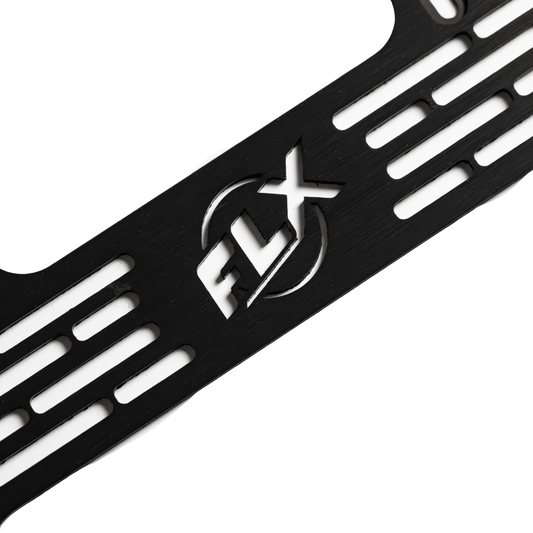
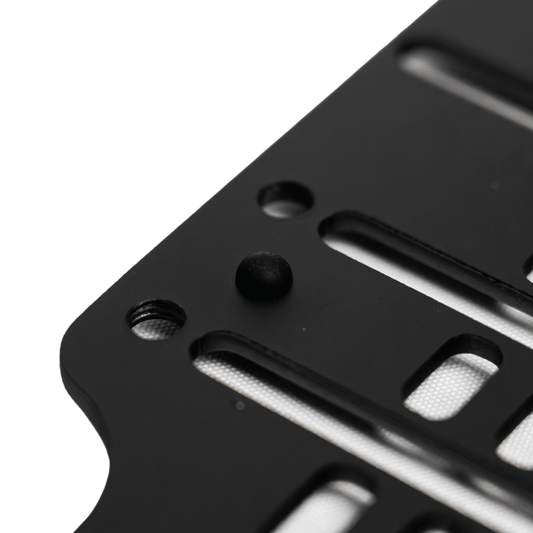
FLX Custom Number Plate Mount | Bracket
Vendor:FLX MAXRegular price From $249.99 AUDRegular price
The Guide
Number plate brackets, explained
Every FLX bracket is built in Melbourne to the exact dimensions of one plate format. You pick the bracket that matches your plate — not one forced to fit it.
A number plate bracket sits between your plate and your car. It re-aligns the plate so it reads flat and square against the bumper, hides the fasteners behind the plate face, and removes the moulded plastic surround the car came with. The plate mounts to the bracket; the bracket mounts to your car's existing factory mounting points. The result is what most people call a floating look — no visible screws, no dealer frame, no gap between the plate and the bar.
Why metal, not moulded plastic
Moulded plastic frames flex in the heat, crack on rough roads and yellow with UV exposure. Metal doesn't. It holds the plate rigid, resists corrosion and keeps its finish for the life of the car.
Materials vary by format. Laser-cut aluminium is anodised black; steel components are powder-coated black. Every bracket ships with black hardware, plus rubber washers and spacers that sit between the bracket and the bumper to dampen vibration and protect the paint underneath. Each listing states the exact material for that product.
How they mount
There are three fitment methods, and which one applies depends on where your car's plinth holes sit relative to the plate. Most vehicles sold in Australia use method one — a direct mount through the existing factory mounting points. Method two mounts the bracket over the existing plinth. Method three covers vehicles that need an adapter to centre the plate. Read the fitment guide, or send a photo of your bumper through the contact page and we'll confirm the method before you order.
One bracket or two
Each listing is priced per bracket. Fitting the front and rear of the car takes two. Front and rear plate formats are usually identical in Australia, but a small number of vehicles run different sizes front to rear — worth measuring both before you order.
Brackets by plate format
Standard — the full-height 372 × 134 mm plate issued as the default across every state and territory. The most common bracket we ship.
Slimline — same width, reduced height. Suits European and modern vehicles where a full-height plate crowds the bumper recess. Sized by character count: 6, 5, or 3–4.
Heritage — Victoria's original numeric series, issued between 1932 and 1939 across the range 1 to 285,000. The series is closed, so these plates only change hands through resale. Brackets are built per digit count, from three to six.
Euro — the long, shallow 520 × 110 mm format built for European bumper recesses. Fits across states that permit the size.
Q plates — Queensland's black-on-white heritage-style format. Deserves better than the moulded surround it usually arrives in.
JDM — Japanese-format plates for imports and enthusiast builds, mounted with the same hidden-fastener approach as the rest of the range.
Frequently Asked Questions
Find answers to common questions about FLX brackets.
